
The fabada recipe (butter bean and chorizo stew)

While pulses are a staple food in many parts of the world, they are not very common in European cuisine. Spain, however, is one of the continent’s leading consumers of legumes, with many earthy legume-based stews. One possible explanation is that the Jewish population, which was widespread in Spain, had many traditional dishes that included legumes. When the Jews were expelled from the country, some of them decided to become Christians to stay and keep their homes and possessions. Those who remained continued to cook the traditional recipes, but always added a piece of pork to prove that they had truly converted to Christianity.
The following recipe was given to me by a friend that defines herself as a “fabada taliban”, and she would never forgive an incorrect fabada recipe. I hope she will allow us not to use Asturian fabes, as they are very hard to find in the UK.
Ingredients:
1kg butter bean
2 large fresh chorizo
2 large asturian morcilla
300g of panceta
1 onion
3 garlic cloves
Olive oil
Salt, saffron and smoked paprika
How to cook:
- Soak the beans the night before (approximately 12 hours before) in a container with water.
- Put all the ingredients in a pot (except salt and oil), cover it with cold water in sufficient quantity to cover one finger above the beans. The onion we will put it whole and the cloves of garlic, too.
- Bring to boil, at this moment we will see that it has formed on the surface an ugly foam product of the impurities of the stew itself and we remove it with a skimmer or ladle.
- We add half a glass of cold water to (scare) the beans with this we cut the cooking and avoid that the beans lose their skin during the cooking. Repeat this step once or twice more, cover the pot and let it cook over low heat.
- Continue cooking with the pot slightly uncovered on low heat for about an hour and a half, or less time if it is on higher heat. In any case, the cooking time is always relative and depends on the quality of the beans, some need more time and others less.
- Watch from time to time and as the water is consumed, add cold water to stop the boiling and prevent the beans from breaking.
- Avoid stirring the fabada with any device during cooking or you will break the beans, it is enough to stir the pot in back and forth movements, so you will get the mixture of all the ingredients.
- When the beans are soft, tender and whole, you should try and if they need salt, add, almost always put some salt (sometimes with the salt of the compango is enough), leave on the fire a few minutes more. At this point the onion will be cooked, pass it to the blender with some beans, a little liquid from cooking, the teaspoon of paprika and saffron threads, grind everything and add it to the pot. Cook for a few more minutes.
- Turn off the heat, let stand for a few minutes so that the broth acquires body and a slight thickness.
- Drizzle with a very thin trickle of extra virgin olive oil (optional) and serve.
Related Products
-
 Original price was: £9.95.£8.60Current price is: £8.60.
 -



Latest Blog Posts

Smoked Pimenton De La Vera (DOP) – Authentic Spanish Smoked Paprika in the UK
Few ingredients define Spanish cooking as unmistakably as Smoked Pimenton De La Vera. Deep crimson in colour, intensely aromatic and unmistakably smoky, this spice is far more than “paprika”. It is the backbone of countless traditional dishes and one of Spain’s most...
Easy Chorizo Recipes: Quick Spanish Dishes Packed with Flavour
If you’re looking for easy chorizo recipes that are genuinely quick, full of flavour and feel a little more special than your average weeknight dinner, you’re in the right place. Over the years, I’ve cooked with all sorts of chorizo, but I keep coming back to proper...
Authentic Jamon Croquetas Recipe – A Spanish Classic
If you’ve ever tasted croquetas in a Spanish tapas bar, you know they’re irresistible. Golden and crispy on the outside, creamy and packed with flavour inside, these Jamón croquetas are the ultimate comfort food. In this post you will find a jamon croquetas video...
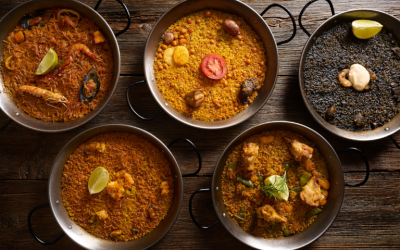
How to Choose Paella Rice and Why It Makes All the Difference
To make an authentic Spanish paella, you need to choose paella rice carefully. Short-grain varieties are ideal because they absorb flavour without becoming sticky. The right choice guarantees that every grain stays firm and full of taste, giving you that perfect...
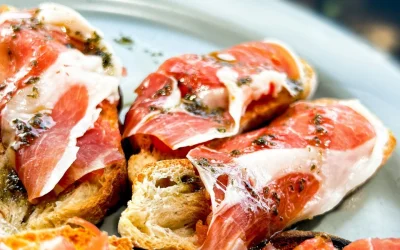
What is Iberico de Bellota? The Ultimate Guide to Spain’s Finest Ham
Iberico de Bellota is Spain’s most prestigious ham, crafted from purebred Iberian pigs raised free-range and fed on acorns during the montanera season. This unique diet and traditional curing process create an intense, nutty flavour and melt-in-the-mouth texture that...
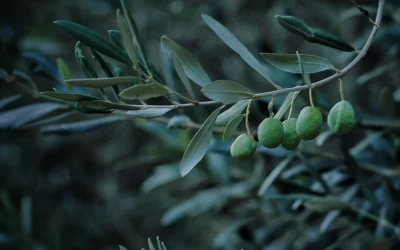
All About Spanish Extra Virgin Olive Production
Olives have been cultivated in Spain for over 3100 years and Spain is the undisputed world leader in olive oil production. The production of the Spanish liquid gold is the result of a long tradition and the latest scientific knowledge.